Decay of 2020 - Experiences of a farmer during lockdown
- THIYAGRAJ G
- Feb 15, 2021
- 2 min read
Updated: Feb 17, 2021
Amidst the most uncertain and strange times of Earth, when the whole world went into quiet hibernation—industries shut down, restricted transportation, loss of human contact and communication. Despite these troubles, the entirety of the human race could not have sustained itself without one of the most primitive and primary forms of occupation, that is agriculture. “I cannot leave my land fallow. It should be done. I should do it” says Balamurugan, who has been farming for the past thirty years.
When asked about 2020’s lockdown and its impact upon agriculture, the farmer elaborated on his losses faced during last year. The lockdown had been seemingly imposed overnight at the time of harvest season. The plantains of Balamurugan were blooming with fruity-yellow bananas but there were no means to sell it. The restriction imposed upon vehicle movements had left farmers with no option to transport their yield stocks for sale. Half of the stocks perished while the rest were sold for brutally low price.
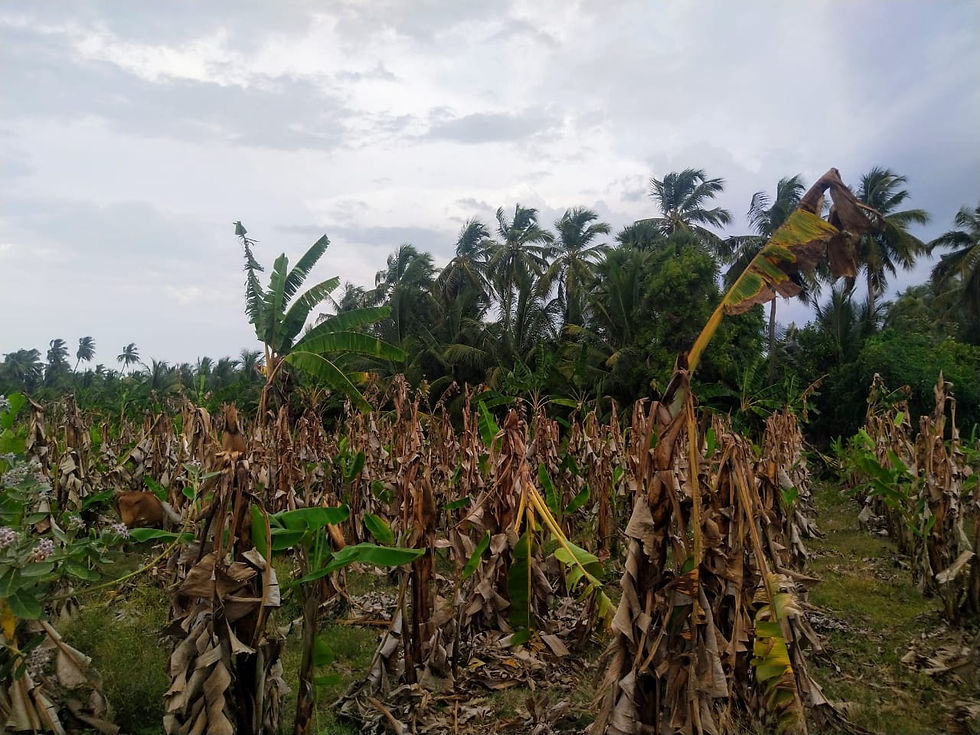
Fig 1: Perished plantains during the period of lockdown.
Balamurugan laments on how farmer’s cooperative unions were neither much of help during the period of lockdown. He adds on to share his experience on how difficult it had become then to get workers during the lockdown, due to which farmers like him became helpless with no sort of even human contact, let alone cooperation and support.
When compared to other years when the invested money on crops would at least get secured after the yield, the year 2020 was a complete failure to farmers. The farmer had sowed his fields with paddy in the latter half of last year with a hope to regain his losses. Unfortunately, the heavy monsoon of the previous year followed with plant infections such as brown spotting and pest attack which had failed the paddy fields as well. Luckily, the loss was tackled during last year when the government came forward to buy the paddy yielded with a minimum selling price (MSP).
Animal husbandry seems to be a more reliable and profitable venture for farmers than agriculture. The percentage of risk is relatively low where problems are evasive when compared to agriculture. “Poultry chickens do get infections,” says Balamurugan on which he adds on that “it could be cured once treated with veterinarians, while plant infections are highly uncontrollable and costlier to control”. Pesticides and weedicides are unhealthy to soil and consumers yet we are bound to use it in order to secure our yield. Organic farming as an alternative practice is deemed “unpractical” with a considerably low production when compared to conventional methods of farming.

Fig 2: Animals ranging from country chickens to elegant horses.
By the end of the conversation, the farmer acknowledges the uncertainty of the outcome of his occupation and still chooses to continue with the same. When asked about such a never-give-up attitude of farmers in general, Balamurugan affirmed saying “This is my work. I should do this, whatever the yield maybe. I can’t leave my land fallow. I should do this. There is no certainty of profit or loss, but this is my only occupation” which reflected on his unconditional commitment and respect towards his profession.

Fig 3: Unused rusted plough could symbolize nothing but the decay of agriculture.


Comments